FUE or DHI: which technique to choose, simple differences explained
Anyone who begins to find out about hair transplants immediately encounters two acronyms: FUE e DHI. They seem like rival alternatives; in reality they are two instruments from the same box, and the right question is not "which is better" but "which one is best for my case".
In this guide you will find what the surgical team explains in the consultation: how the two techniques work, where each excels and how to decide - honestly, without pushing the more expensive one.
How FUE works
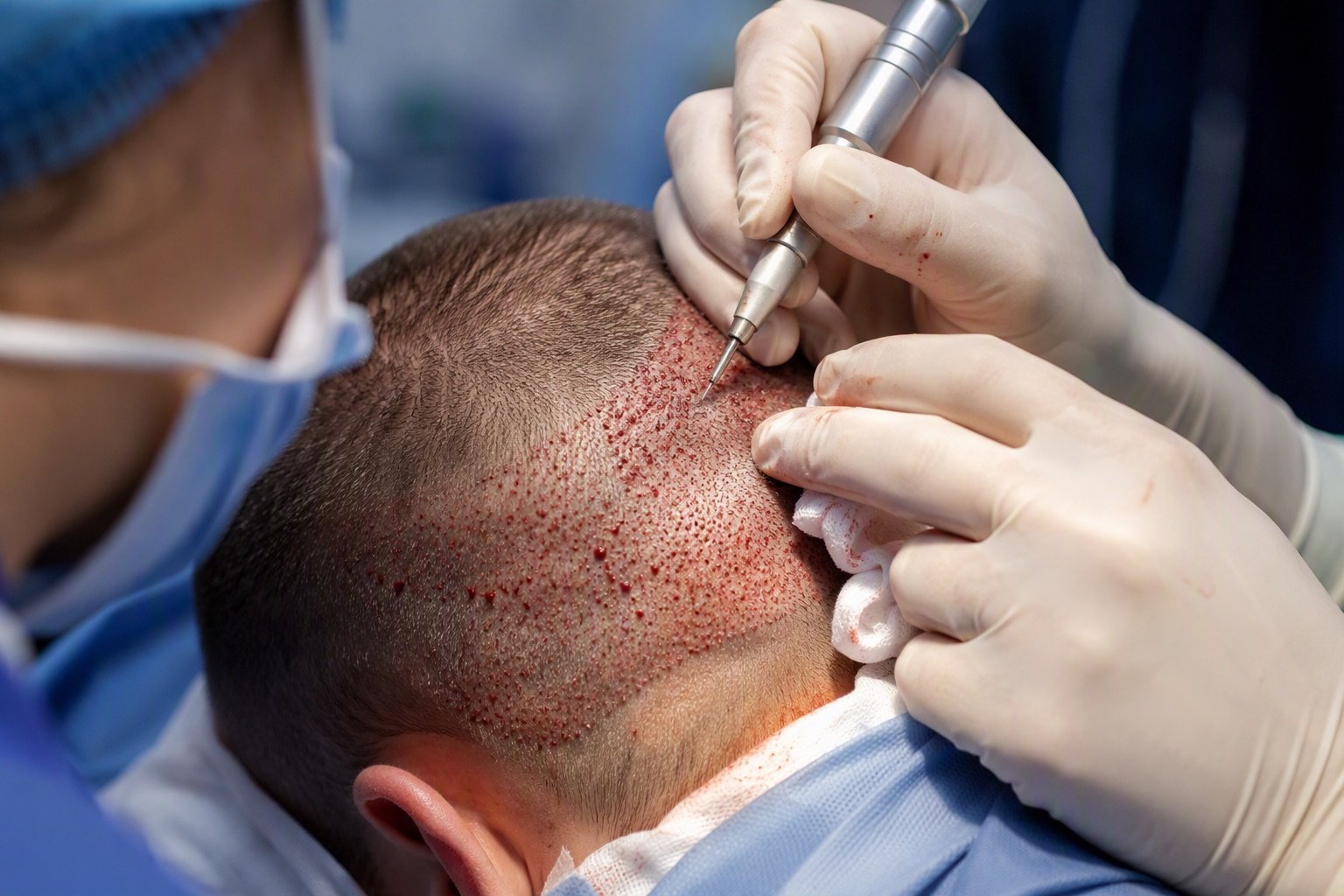
FUE (Follicular Unit Extraction) extracts the follicular units one by one from the donor area - nape and temples, where the hair is genetically resistant - with a micro-punch 0.8–0.9 mm. Then the surgeon opens the micro-channels in the thinned areas and the grafts are implanted.
The strong points: no linear scars (unlike the old strip technique), quick times even on large surfaces and the possibility of covering up to 4,000 grafts in one megasession. It's the most requested technique in the world, and for good reason.
How DHI works
DHI (Direct Hair Implantation) changes the implantation phase: each bulb is loaded into one Choi pen — a precision hollow needle — and implanted directly into the skin, without opening the channels beforehand.
- Total control of angle, direction and depth of each individual bulb: fundamental on the front line.
- Higher density: the implants can be closer together.
- More viable bulbs: they stay outside the body for less time.
- Perfect for beards and eyebrows, where the angle is almost horizontal.
On the frontal line the difference is made by the angle of each individual hair. That's where the Choi pen is at its best: the result looks natural because it is, bulb by bulb.
Direct comparison
| FUE | DHI | |
|---|---|---|
| Scar | Invisible micro-stitches | Invisible micro-stitches |
| Large surfaces (2,500–4,000 grafts) | Ideal | Possible, longer times |
| Density and front line | Excellent | Maximum |
| Beard and eyebrows | Not indicated | Ideal |
| Intervention duration | 6-8 hours | 6-8 hours |
| Package price (up to 2,500 grafts) | from €1,490 | from €1,790 |
In summary: to cover large surfaces efficiently, FUE remains the reference; For maximum density on the forehead line, precision touch-ups and delicate areas of the face, the DHI is superior. Often, in extensive cases, the two techniques are combined in the same session.
Don't know which technique is right for you?
Send us 3 photos of your skin on WhatsApp: the team will tell you which one is best for your case, and why. Free evaluation in 24 hours.
How to really choose
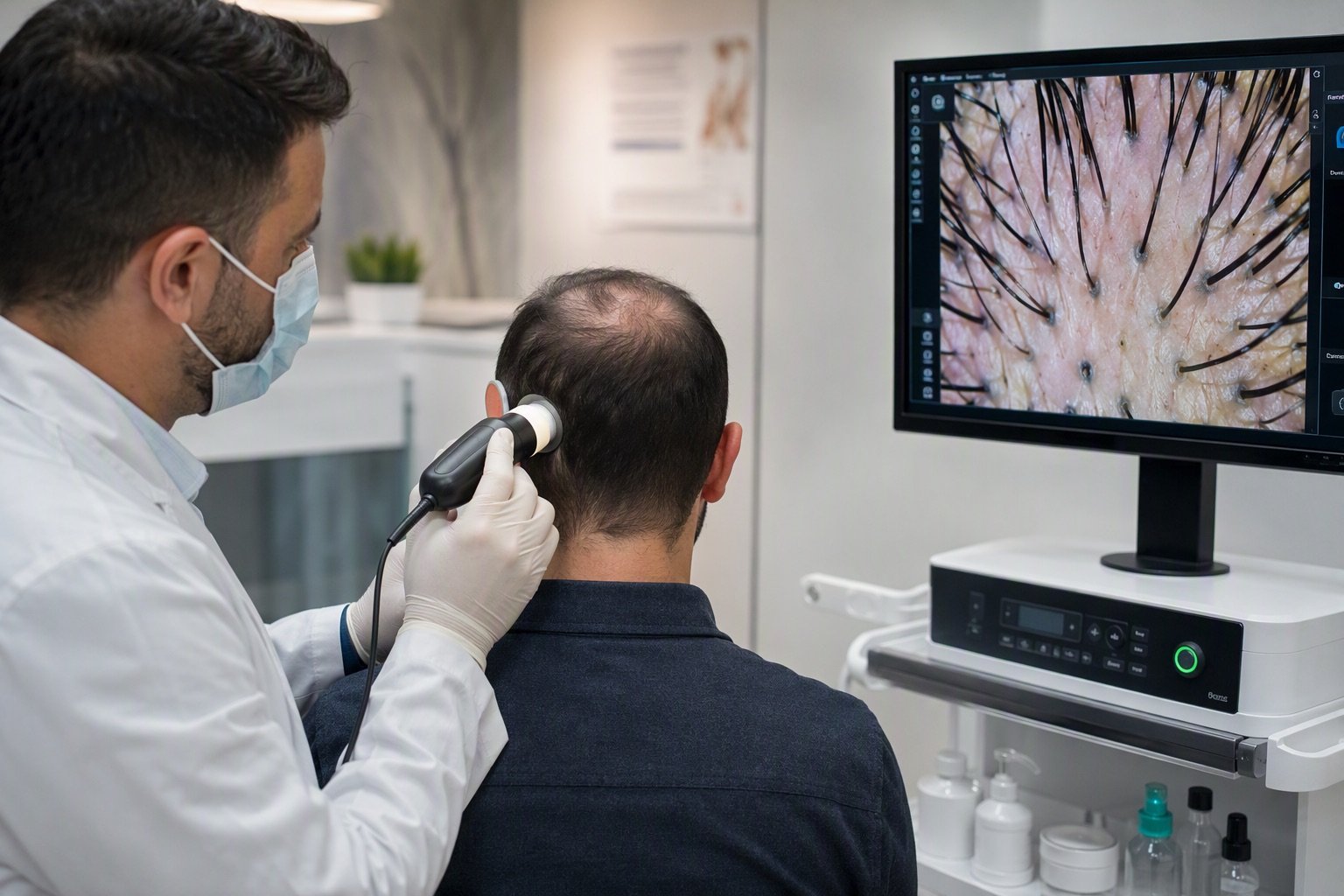
The choice is not made on the price or on the fashion of the moment: it is made on four variables that the free evaluation measures on your photos:
- Extent of thinning (Norwood scale): above 2,500–3,000 grafts FUE is almost always the option.
- Areas to treat: frontal line and temples reward DHI; mid-scalp and clerical are worked very well in FUE.
- Quality of the donor area: density and thickness of available bulbs.
- Discretion needs: if you can't appear shaved, consider No-Shave FUE.
Remember: be wary of anyone who offers the same technique to all patients. A serious evaluation starts from your photos and your objective, not from the price list.
Free evaluation in 24 hours
Send 3 photos of the skin on WhatsApp: the surgical team will tell you the technique, number of grafts and written estimate. Free, without obligation, in Italian.
Written by
Tirana Hair Transplant Team
The Italian team that accompanies patients from the evaluation of the photos to the 12-month follow-up, in collaboration with the team of the specialized partner clinic in Tirana.